


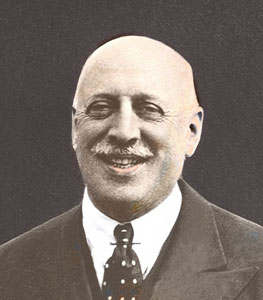
In an article written in 1941, "Wheresoever the Carcass is...", C.. H. Douglas explained how International Finance has aided and abetted Socialism. Douglas outlined the main tenets of Socialism, as follows and brilliantly summarized the special interest of International Financiers. in Socialism:
When you have done this, you can put everyone on the wage and salary list, and invent a job for them, even if it's only filling in Forms to show how many people are filling in Forms. Then you will have solved the unemployment problem, which is the curse of Capitalism, if you don't know enough to recognize it as the coming of the Age of Leisure. And if people don't like filling in Forms, well, "He that will not work, neither shall he eat."
It is clear, I think, that it is exactly in the realm to which Socialism has contributed nothing, the realm of individual initiative, invention and scientific discovery, that we have made our progress towards a leisure civilization, se- curity and culture. And exactly in the realm in which Socialism operates exclusively, that of Law and the infringement upon the liberty of the in- dividual that the major and increasing frictions of Society occur, and the stultification of Science is accomplished. It is not the concern of Science to deal with Distribution. And with regard to Finance, which is the mechanism of Distribution, Socialists and the Financiers have always been of like mind.
In this, we approach the answer to our original question why does Socialism receive support from International Finance and specifically German-American-Jew Finance? That answer is that Law places the sanctions of the State, aims continually at the transfer of Property to the State. This property then becomes available as security for State Loans created by the Financiers out of paper credits i.e., the monetisation of the collective credit of the community concerned. The Bond-holders are exactly what their title would imply they are the slave holders of the "New Order". Just enough of the Bonds are distributed to the Public to obscure the real nature of the transaction and to create a vested interest in the protection of the Financier.
Quoted from The New Times, July 29, 1960
Study Session on Economic Democracy And Annual Congress
Discover C.H. Douglas’s proposals for economic and social renewal with the Pilgrims of St. Michael in Rougemont, Quebec Canada from Sept. 23 through September 28 2026.
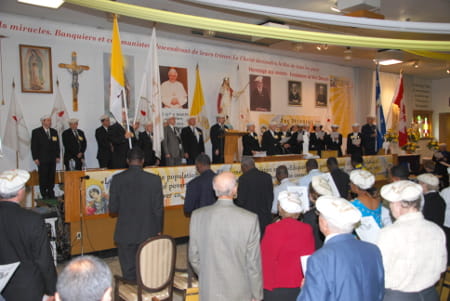
Rougemont Quebec Monthly Meetings
Every 4th Sunday of every month, a monthly meeting is held in Rougemont.

 Subscribe