


In the Farmers Weekly for February 16th, 1962, a writer comments: "Once again the December Agricultural Returns have come to hand, and once again, they make splendid reading. For they show that by comparison with a year ago our farming has appreciably more cattle, more sheep, more pigs and more poultry. (In England — Ed.)
"But in contrast it employs appreciably fewer full-time, part-time and temporary workers. To put it another way our farming continues to produce more and more food from fewer and fewer acres, using less and less manpower".
Another news-cutting, published in Montreal, Canada, reports: "In the chemical industry in 1956, production went up 26 percent while jobs dropped by 17,000. The auto industry, baking industry, meat industry, all record similar increases with a drop in the number of employees needed, because of automation. Agriculture presents the most striking example. Today one man on a farm can feed 24 people. In 1949 he could only feed 15.".
Anybody who looks for it, can find plenty of evidence that an immense capacity for production now exists in the world. The capacity keeps growing. But the standard of living is not growing at the same pace. Why is this so? It is so because the present money system is incapable of distributing the increase. Abundant production in fields or factories creates a "money-crisis". The consuming market is perpetually starved of purchasing power by the financial rules. The benefits due to the community in the form of more and more goods for less and less labour are continually sabotaged by a system of finance that is out-of-date, out-of-balance and accordingly a source of obstruction and discord.
By its failure to provide the consuming market with spending money enough to absorb the ever rising productive power, the present system of finance threatens the peace of the world continually and more and more critically. The tensions that led to World Wars 1 and 2 all stemmed from this financial instability and failure.
All the facts of modern economy point to the urgent necessity of changing the present debt-and-war generating money system for one that is capable of distributing ever-increasing abundance without having to fight at home or abroad for markets.
Social Credit — with its just prices and consumer dividends is the answer. Without Social Credit, the present rat-race for monopoly of world-power with its immense wastes will go on; but with Social Credit once adopted, the bullying urge for 'monopoly' will die out peacefully, whilst in its place peace, plenty and leisure will appear.
Georges Hickling in
Credit Notes for April, 1962
"Social Credit... is the policy which aims at emancipating individuality. It aims at placing the achievements of modern industry at the service of the individual, in order to set him more and more free from the necessity of being organized for some collective purpose."
The Social Crediter, July 9, 1962
It is in the nature of human beings that men in governing positions try to govern; they try to use their power to make the governed people do what is considered good for them. When schemes for promoting general welfare fail to accomplish all that was promised, the men in governing positions instinctively say the failure resulted from too little power in their hands; their programs would have succeeded if they had more power. So, they reach for the power they say they need for the successful promotion of general welfare.
There always have been, and always will be, this conflict between government and the people who are governed – no matter what kind of government it is; all governments are always reaching for more power so that they can do to and for the people what government thinks good for the people.
A people who do not doggedly resist government's perpetual demands for more power can not remain free.
The Dan Smoot Report, Oct. 6, 1958
"The State's financial system would aim at re-organizing the economic situation in such ways as to guarantee to the people the material conditions of life indispensable for the pursuit of the supreme end assigned by the Creator; namely, the development of their intellectual, spiritual and religious life."
Pius XII
Study Session on Economic Democracy And Annual Congress
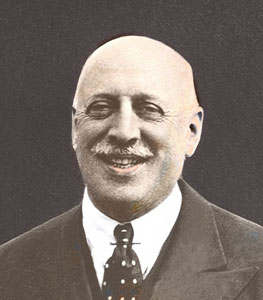
Discover C.H. Douglas’s proposals for economic and social renewal with the Pilgrims of St. Michael in Rougemont, Quebec Canada from Sept. 23 through September 28 2026.
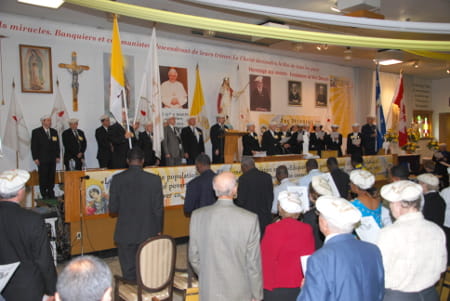
Rougemont Quebec Monthly Meetings
Every 4th Sunday of every month, a monthly meeting is held in Rougemont.

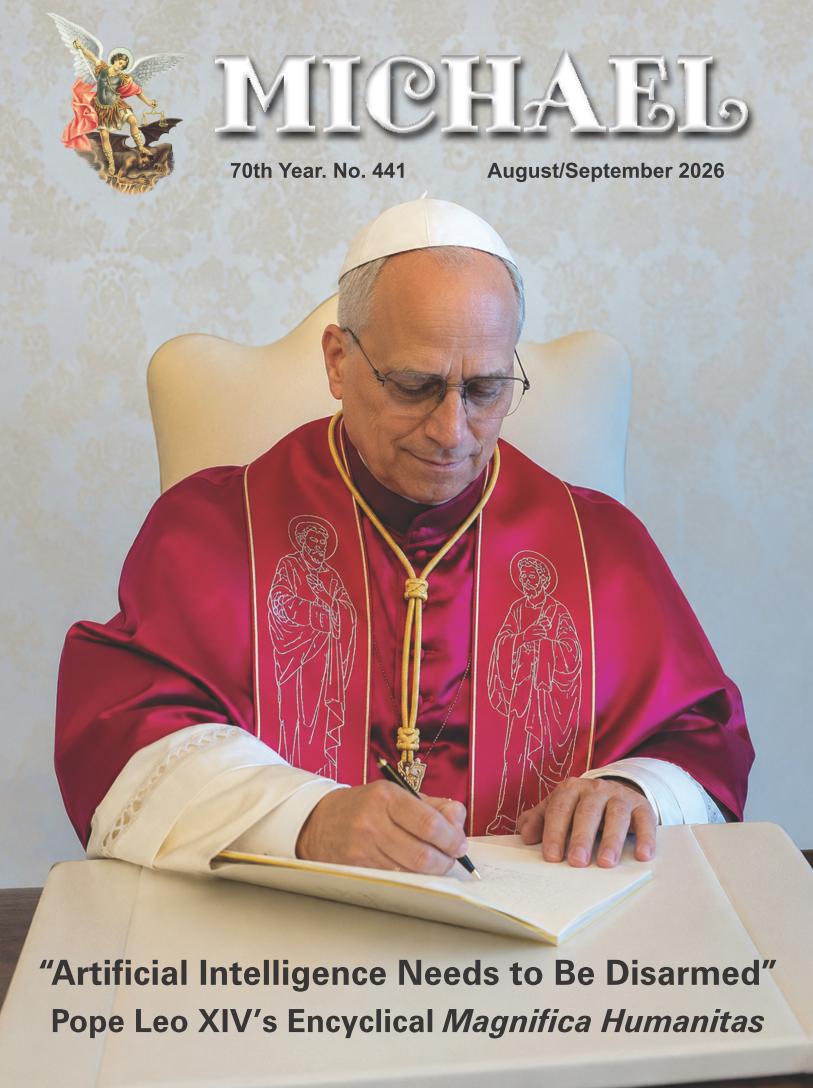 Subscribe