


On October 9, 2025, the Vatican made public the apostolic exhortation Dilexi te (I Have Loved You, Revelation 3:9) on love for the poor, the first major document of Pope Leo XIV. The drafting of this document had begun during the final months of the pontificate of Pope Francis, following his encyclical letter Dilexit nos (He Has Loved Us) on the Sacred Heart of Jesus. At the very beginning of this new exhortation, Leo XIV writes:
"I am happy to make this document my own — adding some reflections — and to issue it at the beginning of my own pontificate, since I share the desire of my beloved predecessor that all Christians come to appreciate the close connection between Christ's love and his summons to care for the poor."
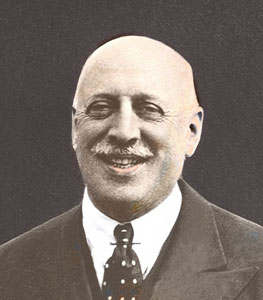
It was love for the poor that motivated Louis Even to undertake his great work for the financial liberation of peoples. For example, Abbé Édouard Lavergne, founding pastor of the parish of Notre-Dame-de-Grâce in Quebec City in 1924, who later became a fervent advocate of Douglas's Economic Democracy (or Social Credit), said to Louis Even: "What I appreciate about Social Credit is that its application, with a dividend for all, would above all, do good to the poor."
This is indeed true. One may also quote these words of Saint Paul VI, taken from his 1967 encyclical letter Populorum Progressio (on the development of peoples) which clearly reflect the purpose of MICHAEL, when he wrote about the person "who is motivated, more than anyone else, who pits his intelligence against the problems of poverty, trying to uncover the causes, and looking for effective ways of combatting and overcoming them."
Here, then, are extensive excerpts from this apostolic exhortation, which deserves to be meditated upon by all friends of the cause of MICHAEL:
by Leo XIV
The condition of the poor is a cry that, throughout human history, constantly challenges our lives, societies, political and economic systems, and, not least, the Church. On the wounded faces of the poor, we see the suffering of the innocent and, therefore, the suffering of Christ Himself. At the same time, we should perhaps speak more correctly of the many faces of the poor and of poverty, since it is a multifaceted phenomenon. In fact, there are many forms of poverty: the poverty of those who lack material means of subsistence, the poverty of those who are socially marginalized and lack the means to give voice to their dignity and abilities, moral and spiritual poverty, cultural poverty, the poverty of those who find themselves in a condition of personal or social weakness or fragility, the poverty of those who have no rights, no space, no freedom.
In this sense, it can be said that the commitment to the poor, and to removing the social and structural causes of poverty, has gained importance in recent decades, but it remains insufficient. This is also the case because our societies often favor criteria for orienting life and politics that are marked by numerous inequalities. As a result, the old forms of poverty that we have become aware of, and are trying to combat, are being joined by new ones, sometimes more subtle and dangerous.
A concrete commitment to the poor must also be accompanied by a change in mentality that can have an impact at the cultural level. In fact, the illusion of happiness derived from a comfortable life pushes many people towards a vision of life centered on the accumulation of wealth and social success at all costs, even at the expense of others and by taking advantage of unjust social ideals and political-economic systems that favor the strongest.
Thus, in a world where the poor are increasingly numerous, we paradoxically see the growth of a wealthy elite, living in a bubble of comfort and luxury, almost in another world compared to ordinary people. This means that a culture still persists — sometimes well disguised — that discards others without even realizing it and tolerates with indifference that millions of people die of hunger or survive in conditions unfit for human beings.
We must not let our guard down when it comes to poverty. We should be particularly concerned about the serious conditions in which many people find themselves due to lack of food and water. In wealthy countries too, the growing numbers of the poor are equally a source of concern. In Europe, more and more families find themselves unable to make it to the end of the month. In general, we are witnessing an increase in different kinds of poverty, which is no longer a single, uniform reality but now involves multiple forms of economic and social impoverishment, reflecting the spread of inequality, even in largely affluent contexts.
Looking beyond the data — which is sometimes "interpreted" to convince us that the situation of the poor is not so serious — the overall reality is quite evident: "Some economic rules have proved effective for growth, but not for integral human development. Wealth has increased, but together with inequality, with the result that new forms of poverty are emerging… looking beyond specific situations and contexts, however, a 1984 document of the European Community declared that "the poor shall be taken to mean persons, families and groups of persons whose resources (material, cultural and social) are so limited as to exclude them from the minimum acceptable way of life in the Member States in which they live." Yet, if we acknowledge that all human beings have the same dignity, independent of their place of birth, the immense differences existing between countries and regions must not be ignored.
The poor are not there by chance or by blind and cruel fate. Nor, for most of them, is poverty a choice. Yet, there are those who still presume to make this claim, thus revealing their own blindness and cruelty. Of course, among the poor there are also those who do not want to work, perhaps because their ancestors, who worked all their lives, died poor. However, there are so many others — men and women — who nonetheless work from dawn to dusk, perhaps collecting scraps or the like, even though they know that their hard work will only help them to scrape by, but never really improve their lives. Nor can it be said that most of the poor are such because they do not "deserve" otherwise, as maintained by that specious view of meritocracy that sees only the successful as "deserving."
Among the Eastern Fathers, perhaps the most ardent preacher on social justice was Saint John Chrysostom, Archbishop of Constantinople from the late 300s to the early 400s. In his homilies, he exhorted the faithful to recognize Christ in the needy: "Do you wish to honor the body of Christ? Do not allow it to be despised in its members, that is, in the poor, who have no clothes to cover themselves. Do not honor Christ's body here in church with silk fabrics, while outside you neglect it when it suffers from cold and nakedness… [The body of Christ on the altar] does not need cloaks, but pure souls; while the one outside needs much care. Let us therefore learn to think of and honor Christ as He wishes. For the most pleasing honor we can give to the one we want to venerate is that of doing what He Himself desires, not what we devise… So you too, give Him the honor He has commanded, and let the poor benefit from your riches. God does not need golden vessels, but golden souls."
For Augustine, the poor are not just people to be helped, but the sacramental presence of the Lord. The Doctor of Grace saw caring for the poor as concrete proof of the sincerity of faith. Anyone who says they love God and has no compassion for the needy is lying (cf. 1 Jn 4:20). Commenting on Jesus' encounter with the rich young man and the "treasure in heaven" reserved for those who give their possessions to the poor (cf. Mt 19:21), Augustine puts the following words in the Lord's mouth: "I received the earth, I will give heaven; I received temporal goods, I will give back eternal goods; I received bread, I will give life…"
The Pastoral Constitution Gaudium et Spes, building on the teachings of the Church Fathers, forcefully reaffirms the universal destination of earthly goods and the social function of property that derives from it. The Constitution states that "God destined the earth and all it contains for all people and nations so that all created things would be shared fairly by all humankind under the guidance of justice tempered by charity… In their use of things people should regard the external goods they lawfully possess as not just their own but common to others as well, in the sense that they can benefit others as well as themselves. Therefore, everyone has the right to possess a sufficient amount of the earth's goods for themselves and their family… Persons in extreme necessity are entitled to take what they need from the riches of others… By its nature, private property has a social dimension that is based on the law of the common destination of earthly goods. Whenever the social aspect is forgotten, ownership can often become the object of greed and a source of serious disorder." (Paragraphs 69 and 71.) This conviction was reiterated by Saint Paul VI in his Encyclical Populorum Progressio. There we read that no one can feel authorized to "appropriate surplus goods solely for his [or her] own private use when others lack the bare necessities of life." (Paragraph 23)
With Saint John Paul II, the Church's preferential relationship with the poor was consolidated, particularly from a doctrinal standpoint. His teaching saw in the option for the poor a "special form of primacy in the exercise of Christian charity, to which the whole tradition of the Church bears witness." In his Encyclical Sollicitudo Rei Socialis, he went on to say: "Today, furthermore, given the worldwide dimension which the social question has assumed, this love of preference for the poor, and the decisions which it inspires in us, cannot but embrace the immense multitudes of the hungry, the needy, the homeless, those without medical care and, above all, those without hope of a better future. It is impossible not to take account of the existence of these realities. To ignore them would mean becoming like the 'rich man' who pretended not to know the beggar Lazarus lying at his gate (cf. Lk 16:19-31)."
Amid the multiple crises that marked the beginning of the third millennium, the teaching of Benedict XVI took a more distinctly political turn. Hence, in the Encyclical Caritas in Veritate, he affirms that "the more we strive to secure a common good corresponding to the real needs of our neighbors, the more effectively we love them." He observed, moreover, that "hunger is not so much dependent on lack of material things as on shortage of social resources, the most important of which are institutional. What is missing, in other words, is a network of economic institutions capable of guaranteeing regular access to sufficient food and water for nutritional needs, and also capable of addressing the primary needs and necessities ensuing from genuine food crises, whether due to natural causes or political irresponsibility, nationally and internationally."
We must continue, then, to denounce the "dictatorship of an economy that kills," and to recognize that "while the earnings of a minority are growing exponentially, so too is the gap separating the majority from the prosperity enjoyed by those happy few. This imbalance is the result of ideologies that defend the absolute autonomy of the marketplace and financial speculation. Consequently, they reject the right of states, charged with vigilance for the common good, to exercise any form of control. A new tyranny is being born, invisible and often virtual, which unilaterally and relentlessly imposes its own laws and rules." (Pope Francis, Evangelii gaudium, Nov. 24, 2013). There is no shortage of theories attempting to justify the present state of affairs or to explain that economic thinking requires us to wait for invisible market forces to resolve everything. Nevertheless, the dignity of every human person must be respected today, not tomorrow, and the extreme poverty of all those to whom this dignity is denied should constantly weigh upon our consciences.
In his Encyclical Dilexit Nos (about the Sacred Heart of Jesus), Pope Francis reminded us that social sin consolidates a "structure of sin" within society, and is frequently "part of a dominant mindset that considers normal or reasonable what is merely selfishness and indifference. This then gives rise to social alienation." It then becomes normal to ignore the poor and live as if they do not exist. It then likewise seems reasonable to organize the economy in such a way that sacrifices are demanded of the masses in order to serve the needs of the powerful. Meanwhile, the poor are promised only a few "drops" that trickle down, until the next global crisis brings things back to where they were. A genuine form of alienation is present when we limit ourselves to theoretical excuses instead of seeking to resolve the concrete problems of those who suffer. Saint John Paul II had already observed that, "a society is alienated if its forms of social organization, production and consumption make it more difficult to offer the gift of self and to establish solidarity between people." (Encyclical Centesimus annus, 1991, Paragraph 41)
We need to be increasingly committed to resolving the structural causes of poverty. This is a pressing need that "cannot be delayed, not only for the pragmatic reason of its urgency for the good order of society, but because society needs to be cured of a sickness which is weakening and frustrating it, and which can only lead to new crises. Welfare projects, which meet certain urgent needs, should be considered merely provisional responses." (Francis, Evangelii gaudium, 202) I can only state once more that inequality "is the root of social ills." (Ibid)
As it is, "the current model, with its emphasis on success and self-reliance, does not appear to favor an investment in efforts to help the slow, the weak or the less talented to find opportunities in life." (Ibid, 209) The same questions keep coming back to us. Does this mean that the less gifted are not human beings? Or that the weak do not have the same dignity as ourselves? Are those born with fewer opportunities of lesser value as human beings? Should they limit themselves merely to surviving?
The worth of our societies, and our own future, depends on the answers we give to these questions. Either we regain our moral and spiritual dignity, or we fall into a cesspool. Unless we stop and take this matter seriously, we will continue, openly or surreptitiously, "to legitimize the present model of distribution, where a minority believes that it has the right to consume in a way which can never be universalized, since the planet could not even contain the waste products of such consumption." (Encyclical Laudato Si, 50)
All the members of the People of God have a duty to make their voices heard, albeit in different ways, in order to point out and denounce such structural issues, even at the cost of appearing foolish or naïve. Unjust structures need to be recognized and eradicated by the force of good, by changing mindsets but also, with the help of science and technology, by developing effective policies for societal change. It must never be forgotten that the Gospel message has to do not only with an individual's personal relationship with the Lord, but also with something greater: "the Kingdom of God (cf. Lk 4:43); it is about loving God who reigns in our world. To the extent that He reigns within us, the life of society will be a setting for universal fraternity, justice, peace and dignity. Both Christian preaching and life, then, are meant to have an impact on society. We are seeking God's Kingdom."
Indeed, caring for the poor is part of the Church's great tradition, a beacon as it were of evangelical light to illumine the hearts and guide the decisions of Christians in every age. That is why we must feel bound to invite everyone to share in the light and life born of recognizing Christ in the faces of the suffering and those in need. Love for the poor is an essential element of the history of God's dealings with us; it rises up from the heart of the Church as a constant appeal to the hearts of the faithful, both individually and in our communities.
As the Body of Christ, the Church experiences the lives of the poor as her very "flesh", for theirs is a privileged place within the pilgrim people of God. Consequently, love for the poor — whatever the form their poverty may take — is the evangelical hallmark of a Church faithful to the heart of God. Indeed, one of the priorities of every movement of renewal within the Church has always been a preferential concern for the poor. In this sense, her work with the poor differs in its inspiration and method from the work carried out by any other humanitarian organization.
At times, Christian movements or groups have arisen which show little or no interest in the common good of society and, in particular, the protection and advancement of its most vulnerable and disadvantaged members. Yet we must never forget that religion, especially the Christian religion, cannot be limited to the private sphere, as if believers had no business making their voice heard with regard to problems affecting civil society and issues of concern to its members. (Evangelii gaudium, 182-183)
Indeed, "any Church community, if it thinks it can comfortably go its own way without creative concern and effective cooperation in helping the poor to live with dignity and reaching out to everyone, will also risk breaking down, however much it may talk about social issues or criticize governments. It will easily drift into a spiritual worldliness camouflaged by religious practices, unproductive meetings and empty talk." (Ibid, 207)
I would like to close by saying something about almsgiving, which nowadays is not looked upon favorably even among believers… Our love and our deepest convictions need to be continually cultivated, and we do so through our concrete actions. Remaining in the realm of ideas and theories, while failing to give them expression through frequent and practical acts of charity, will eventually cause even our most cherished hopes and aspirations to weaken and fade away.
For this very reason, we Christians must not abandon almsgiving. It can be done in different ways, and surely more effectively, but it must continue to be done. It is always better at least to do something rather than nothing. Whatever form it may take, almsgiving will touch and soften our hardened hearts. It will not solve the problem of world poverty, yet it must still be carried out, with intelligence, diligence and social responsibility. For our part, we need to give alms as a way of reaching out and touching the suffering flesh of the poor.
Through your work, your efforts to change unjust social structures or your simple, heartfelt gesture of closeness and support, the poor will come to realize that Jesus' words are addressed personally to each of them: "I have loved you" (Rev 3:9).
Given in Rome, at Saint Peter's, on October 4, the Memorial of Saint Francis of Assisi, in the year 2025, the first of my Pontificate.
LEO PP. XIV
Study Session on Economic Democracy And Annual Congress
Discover C.H. Douglas’s proposals for economic and social renewal with the Pilgrims of St. Michael in Rougemont, Quebec Canada from Sept. 23 through September 28 2026.
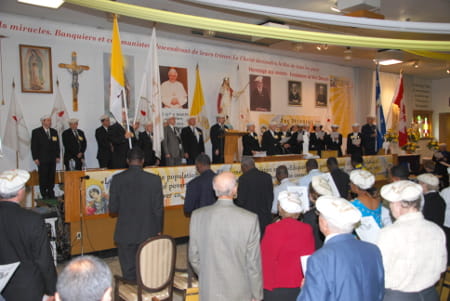
Rougemont Quebec Monthly Meetings
Every 4th Sunday of every month, a monthly meeting is held in Rougemont.

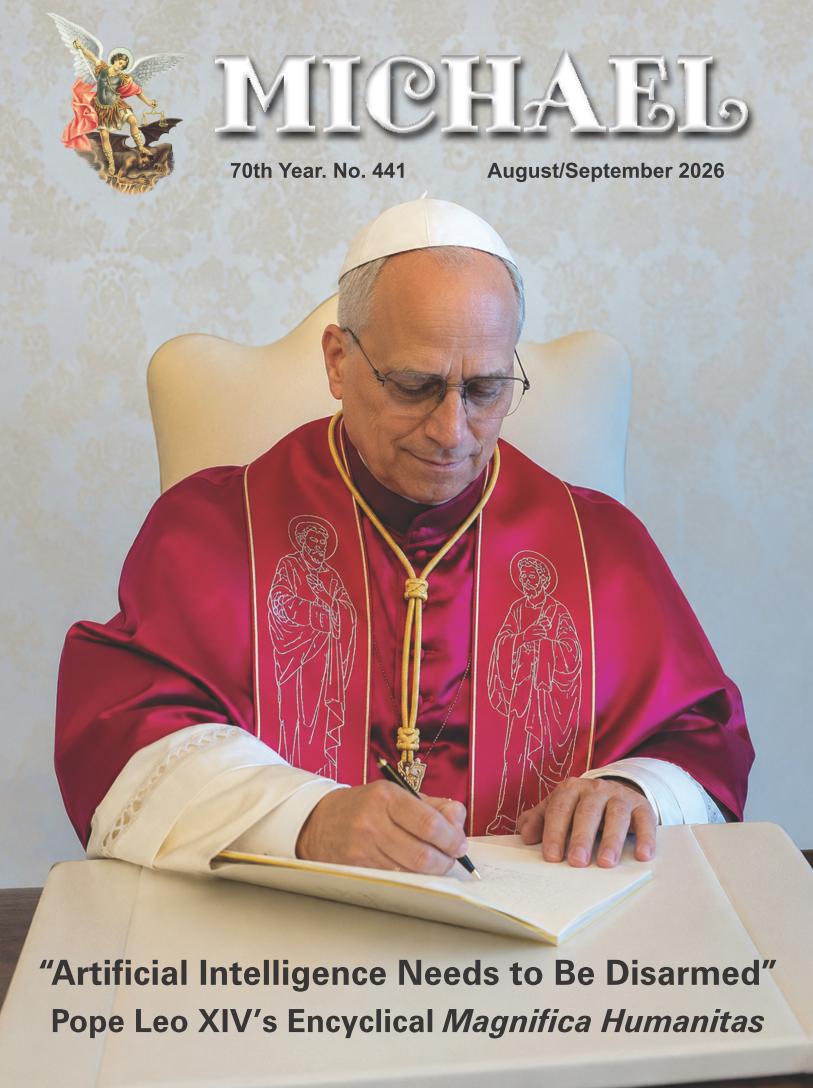 Subscribe