


The above, very formidable phrase plays an important part in Social Credit philosophy. We feel that the following explanation developed by J. W. Carruthers and printed in the New Times of Australia, the issue of October 2, 1959, is first-rate.
I want you to imagine that you had the choice of paying ten pounds per year to one of two telephone systems. The first of them had ten telephone subscribers altogether, and the other had a million subscribers. You would at once say, that for your 10 pounds subscription, you would get very much greater value by joining the system which had one million subscribers.... Or take another case: You were faced with the problem of rolling a heavy stone up a hill. A stone so heavy that one man could not move it. You also have at your disposal ten men and a rope. Would you use one of the men, pulling vainly for five minutes, and then substitute another and so forth, thus exhausting your ten men, without moving the stone? Or would you tie your rope to the stone and put the whole ten men on to pull it up the hill? We would naturally use the ten men at once, combining their forces with the aid of the rope. Now, in this simple instance we have an example of what Social Crediters call the Unearned Increment of Association. By associating together in an undertaking it is possible to do things which the same persons, who, when associating together are successful, would be unable to do if their endeavors were isolated. It is not too much to say that in this fact lies the whole basis of society from tribal days onwards. People have come to understand, that by associating together for various purposes they can achieve results which cannot be achieved without such association.
Now if you were able to measure the creative and productive capacity of say, three million adults in Australia (or Canada Ed.) who are estimated to be employable, taking their productive capacity individually and separated from any assistance, either from the rest or from any tools and processes which have developed amongst us as a community, and you add together these three million productive units separately, you would get a figure, which it would be fair to call, the round result of their individual efforts. In assessing what each individual could do under these conditions you would have to assume that he was totally uneducated because education is a communal inheritance and does not come to a man by his individual effort. You would have to assume that your three million twentieth century Australians had less intelligence than a Central Australian tribe of Aboriginals, that they had no tools, no knowledge of organization and had at their disposal merely undeveloped territory in the state to which nature, unaided, had brought it.
Now, consider these three millions of employable individuals operating with the best possible tools which are in existence at the present, and operating under the best possible management and directed by the best possible policy, towards a well defined and universally agreed objective. You will not dispute that the output of the three million, under these latter conditions, would be enormously greater than that of the three million acting as units without the assistance of the heritage of civilization. If you subtract the output for one year of the three million units from the three million acting as a community, you will get the unearned increment of association, and would probably not need to be assured that the figure under these conditions would be colossal.
Study Session on Economic Democracy And Annual Congress
Discover C.H. Douglas’s proposals for economic and social renewal with the Pilgrims of St. Michael in Rougemont, Quebec Canada from Sept. 23 through September 28 2026.
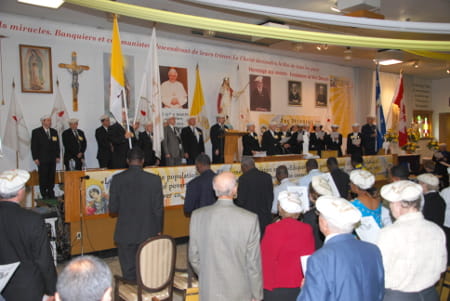
Rougemont Quebec Monthly Meetings
Every 4th Sunday of every month, a monthly meeting is held in Rougemont.

 Subscribe