


The previous article (Michael's campaign for an income for stay-at-home mothers) mentioned the Charter of the Rights of the Family, published by the Holy See in October 1983, which refers to "remuneration for the work of one parent in the home; it must be such that the mother of the family is not obliged to work outside the home to the detriment of family life, especially the education of the children."
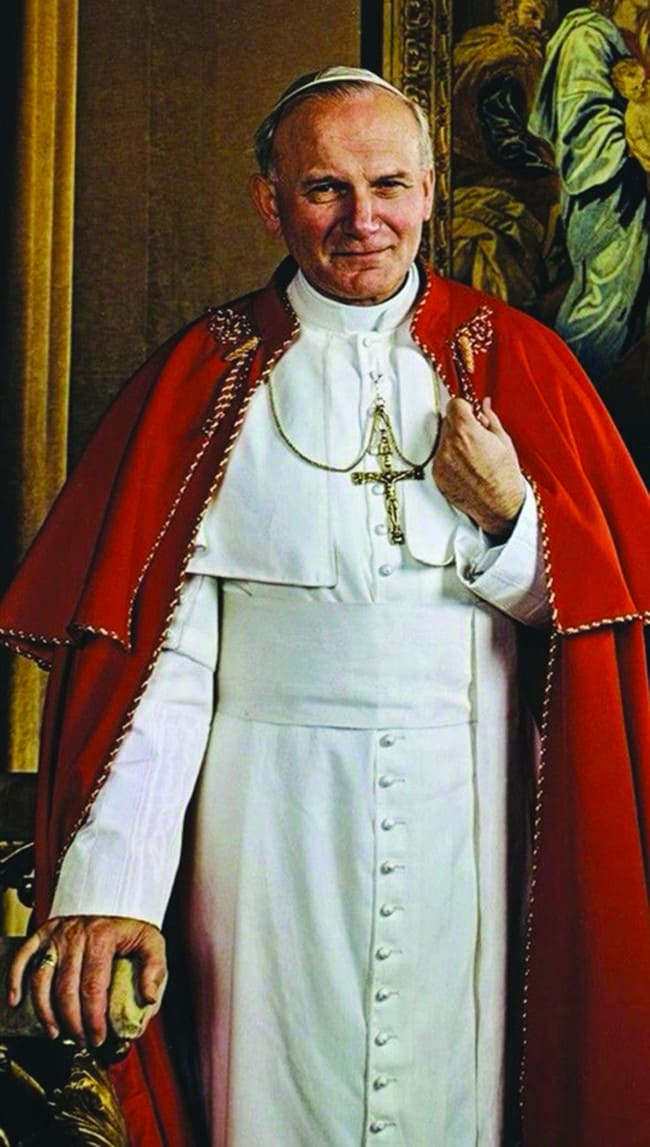 Saint John Paul II
In fact, this appeal from the Catholic Church regarding the importance of a woman's work in the home is not new. As early as 1931, Pope Pius XI wrote in his encyclical Quadragesimo Anno, no. 71:
"It is an intolerable abuse, and to be abolished at all cost, for mothers, on account of the father's low wage, to be forced to engage in gainful occupations outside the home to the neglect of their proper cares and duties, especially the training of children."
More recently, Saint John Paul II wrote in his encyclical Laborem Exercens on human work, dated September 15, 1981, paragraph 19:
"Experience confirms that there must be a social re-evaluation of the mother's role, of the toil connected with it, and of the need that children have for care, love and affection in order that they may develop into responsible, morally and religiously mature and psychologically stable persons.
"It will redound to the credit of society to make it possible for a mother—without inhibiting her freedom, without psychological or practical discrimination, and without penalizing her as compared with other womenà—to devote herself to taking care of her children and educating them in accordance with their needs, which vary with age. Having to abandon these tasks in order to take up paid work outside the home is wrong from the point of view of the good of society and of the family when it contradicts or hinders these primary goals of the mission of a mother."
John Paul II returned to this theme in his address to women workers in Łódz, Poland, on June 13, 1987:
"Woman is the heart of the family community. If the heart fails, the organism ceases to live… All the work that a woman does in the home, all her activity as mother and educator, is important work. It cannot be socially devalued; it must constantly be revalued if society does not wish to act to its own detriment… A true promotion of women requires from society a particular recognition of maternal and family tasks, since they are of greater value than all other tasks and public professions…
In everything that concerns education, woman is irreplaceable, especially in the early years of a child's life — irreplaceable. My fervent wish is that all children in the world, and particularly in my homeland, may be raised by their own mothers within their families, and that there be no abandoned children gathered into'children's homes'(daycares) — useful social institutions, but which do not substitute for feminine genius."
The Pope's words are very clear: the presence of the mother is irreplaceable, especially in the child's early years. This means that daycares, however useful they may be, however well equipped and clean they are, and however dedicated and well-intentioned their staff may be, will never replace a mother's "genius" and affection.
Moreover, even the strongest supporters of daycare agree that a mother's presence in the home is preferable during a child's first three years. They therefore propose longer maternity leaves (21 weeks) or workplace daycares. These measures may help women in the workforce, but they bring absolutely nothing to those who remain at home. Why are feminists opposed to any assistance for stay-at-home mothers?
In Canada, in 1951, only 7% of women worked outside the home. In 1967, the figure was 17%. In 2024, it exceeds 61%. In fact, the traditional family — that is, the father working outside the home and the mother remaining at home to care for the children — has become the exception, representing only one family out of six in Canada. Why this change?
It is essentially a question of money. The cost of living has risen so dramatically that the husband's single salary is no longer sufficient to support the entire family. If 60% of women in Canada work outside the home, it is because most of them are financially compelled to do so. If they truly had the choice, many would prefer to remain at home full-time to care for their children.
What some feminists do not understand — or do not wish to understand — is that a woman can be highly intelligent and still consider it preferable, for the good of her children, to choose to remain at home full-time to care for them. The stay-at-home mother has no reason to feel inferior to women who work outside the home, since, as the Pope reminded us, "maternal and family tasks are of greater value than all other public professions."
It is also wrong for certain feminists to claim that granting an income to mothers aims to "confine women to the home." Those who wish to work outside the home remain free to do so. But those who choose to remain at home full-time to care for their children should receive an allowance that recognizes the importance of their work in the home. As John Paul II explained in an address in Piacenza, Italy, on June 5, 1988:
"The dignity of man and woman is equal, for both are created in the image of God. All areas of human activity — economic, social, cultural, or political — are and must be open to women. But there is a specific activity that particularly concerns woman as'mother of the living.'It is in this that woman finds her highest expression; and it is therefore just that the State and society support her in the fulfillment of this duty through social benefits similar to those granted to women who work outside the home."
Therefore, the government should at least grant mothers who work in the home the same amount that it gives to mothers who work outside the home and send their children to daycare. In Quebec today, the cost of daycare for one child ranges between $15,000 and $20,000 per year, of which a maximum of $2,520 ($9.65 per day multiplied by 261 days) is paid by the parents. For two children, it is already double. Yet with the same allowance, a stay-at-home mother is just as capable of raising two children as one.
Much could also be said about the enormous social costs resulting from the absence of the mother in the home: family conflicts, divorces, psychological difficulties among children, juvenile delinquency, and other problems that are sometimes irreparable. In fact, granting an income to the stay-at-home mother is by no means excessive; one can easily conclude that it would cost the government less to provide an income to mothers than to subsidize daycare centres.

Alain Pilote has been the editor of the English edition of MICHAEL for several years. Twice a year we organize a week of study of the social doctrine of the Church and its application and Mr. Pilote is the instructor during these sessions.
Study Session on Economic Democracy And Annual Congress
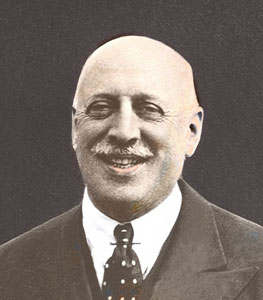
Discover C.H. Douglas’s proposals for economic and social renewal with the Pilgrims of St. Michael in Rougemont, Quebec Canada from Sept. 23 through September 28 2026.
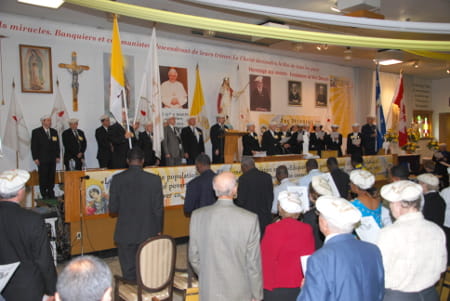
Rougemont Quebec Monthly Meetings
Every 4th Sunday of every month, a monthly meeting is held in Rougemont.

 Subscribe